


I should confess something about how we gathered the data for our Behavioural Science in GRC report.
While I was busy researching how behavioural science applies to governance, risk and compliance – I accidentally ran a small behavioural science experiment of my own. On my own research participants….without entirely meaning to.
Here’s what happened.
The setup
As part of the research, we invited survey respondents to take part in a short follow-up interview – 30 minutes, online, to explore the themes emerging from the data in more depth, pretty standard stuff.
The first round of interview invitations went out as a fairly traditional researcher’s email. Professional, clear, polite. It thanked people for completing the survey, explained what the interview would involve, and asked them to reply with some available dates.
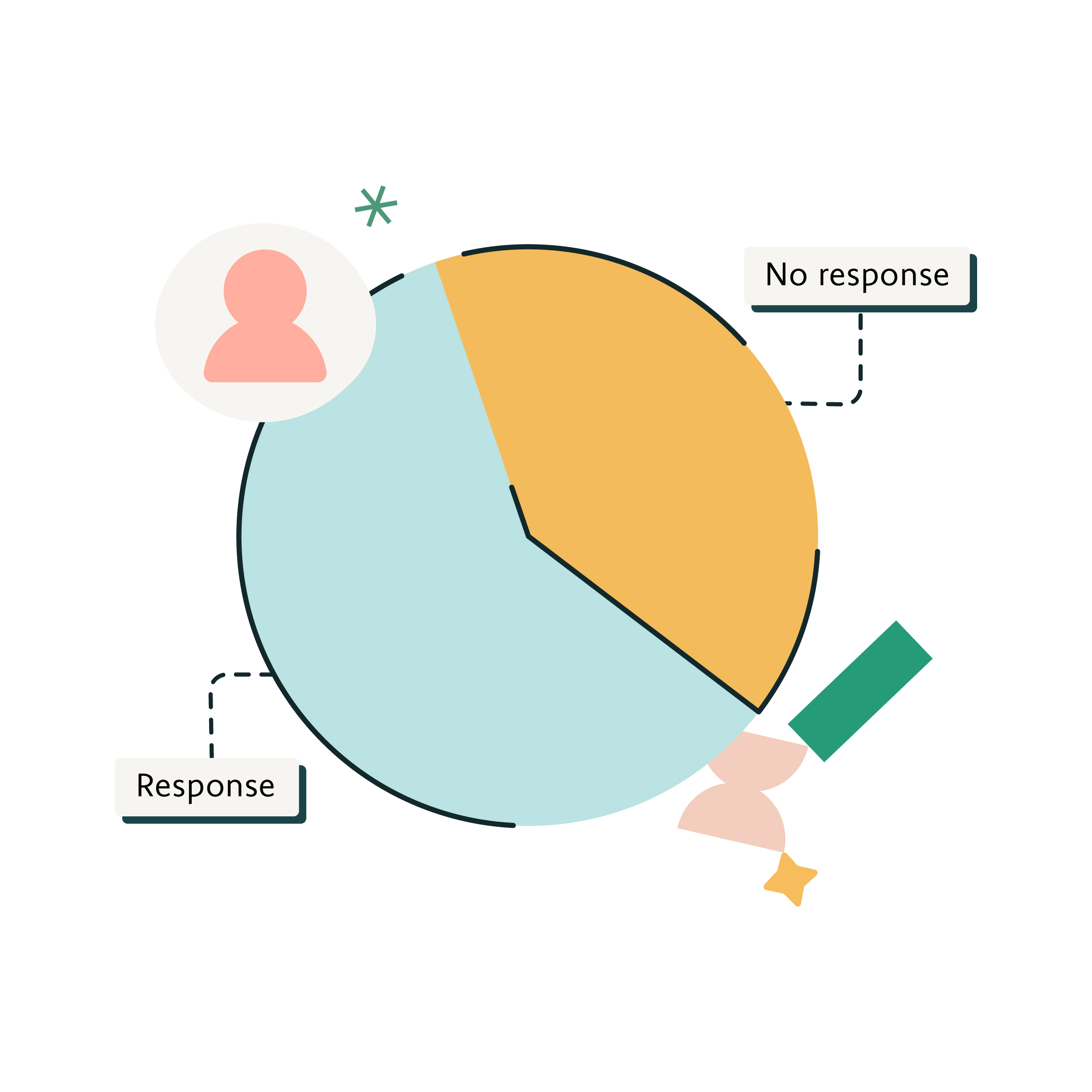
Over two weeks, I sent that email to 31 people and received 5 replies.
That’s a response rate of about 16% – not terrible, but not great either. Certainly not enough for the depth of qualitative data we were looking for.
The setup
The rethink
At this point, we had finished collecting survey responses and I needed to significantly increase the number of interview participants. So, I did what any behavioural scientist probably should have done from the start: I rewrote the email using the principles I was supposed to be researching.
The new version was built around five specific behavioural insights:

Making it easy
The original email asked people to “reply with some dates and times.” The new version said “simply reply to this email and I will schedule you in.” One less decision, one less thing to figure out – friction reduced.

Ego
The original framing was researcher-centric – what we were interested in understanding. The new version put the participant at the centre: “your insights will directly shape the final research findings.” Their contribution mattered, their voice would be heard.
Social proof
The original email said nothing about how many other people were participating. The new version noted that over half of all survey participants had expressed interest in being interviewed. Nobody wants to be the only person who didn’t show up!

Scarcity
A gentle nudge: “I have slots available over the next 2–3 weeks, so do grab one while they’re there.” Not pressure – just a quiet reminder that the window wouldn’t stay open forever.
Reciprocity and commitment
Rather than a generic opener, the new email opened by referencing something the recipient had already done: “When you completed our survey recently, you kindly indicated that you’d be open to a follow-up interview.” They had already said yes, in a sense. This email was just reminding them of that – and making it easy to follow through.
The result
The second email went to 55 people – a mix of new respondents and those who hadn’t replied to the first version.
At the time of writing, 10 people have agreed to take part – with potentially more to come. That’s a response rate of around 18% on the full group, but the more meaningful comparison is this: among the 24 people who received both emails and ignored the first one, several said yes to the second. The reframe worked even on people who had already passed once.

What this actually tells us
I want to be careful not to overclaim here. This was not a controlled experiment – the two groups weren’t identical, the timing was different, and there are any number of variables I didn’t account for. A proper A/B test this was not.
But the directional finding is hard to ignore: a more behaviourally informed email generated meaningfully better engagement than a standard researcher’s version – even when sent to people who had already demonstrated they weren’t going to respond to the first approach.
Which is, when you think about it, precisely the argument at the heart of our report. Behavioural science principles are not abstract theory. They are practical tools that change real outcomes – in compliance communications, in policy design, in training programmes, and apparently, in slightly meta research emails sent by a behavioural scientist who really should have known better from the start.
The emails, side by side
If you’re curious, here are the two versions – judge for yourself which one you’d have replied to.
Version 1
Standard researcher format
Version 2
Behaviourally informed
Hello Survey Participant,
Thank you very much for completing our recent Behavioural Science in GRC survey, which we designed in partnership with the AGRC and Risky Women.
Thank you also for agreeing to take part in a 30-minute online conversation to explore some of the themes emerging from the data in more depth.
We’re particularly interested in understanding:
- How behavioural factors show up in real-world GRC practice
- Where behavioural science feels credible — or not
- What would make capability-building genuinely useful for professionals like you
The aim of the conversation is to ensure the findings accurately reflect the realities of Governance, Risk and Compliance practice, and to shape practical recommendations for the profession.
If you are still willing to participate, please reply to this email with some dates and times in the next 2–3 weeks that could work for you, including your time zone if you are not in Europe / the UK.
I will then set up a Teams link for the meeting.
Feel free to reach out to me directly if you have any questions.
Many thanks in advance for your help, Best, Shelley
Hello,
When you completed our Behavioural Science in GRC survey recently, you kindly indicated that you’d be open to a follow-up interview – so here’s how you can get involved!
Over half of our participants expressed interest in being interviewed, and I’m now scheduling those conversations. The interviews are short (around 30 minutes), informal, and genuinely valuable – your insights will directly shape the final research findings, which we’ll be sharing with the wider GRC community later this year.
I have slots available over the next 2–3 weeks, so do grab one while they’re there. To set up your meeting, simply reply to this email and I will schedule you in.
Thank you again for your time and your contribution to this research – it really does make a difference.
Warm regards, Shelley
A final thought

The GRC profession spends a considerable amount of time trying to get people to do things – follow policies, complete training, report concerns, change behaviours. The tools to do that more effectively already exist. They are well-evidenced, practically applicable, and – as this small accidental experiment perhaps illustrates – they work even in contexts as mundane as a research recruitment email.
That is the argument our report makes at length, and with considerably more rigorous data than my own inbox can provide. If you work in GRC and you haven’t yet considered how behavioural science could change the way you communicate, design processes, or build capability – we hope this report gives you a reason to start.
Download a copy of the report now. (While it’s still available.)
Please subscribe to download the full report
Shelley Hoppe is the Founder of the BEHAVES Academy and SBC, a behavioural learning and communications consultancy, and Chair of the GAABS Editorial Board. The Behavioural Science in GRC report was produced in partnership with the AGRC and Risky Women.


